Mostrando postagens com marcador LUA. Mostrar todas as postagens

sábado, 18 de maio de 2019

https://www.revistaplaneta.com.br/lua-vem-encolhendo-e-sofrendo-muitos-terremotos/

Por que a Lua está encolhendo 'como uma uva passa'

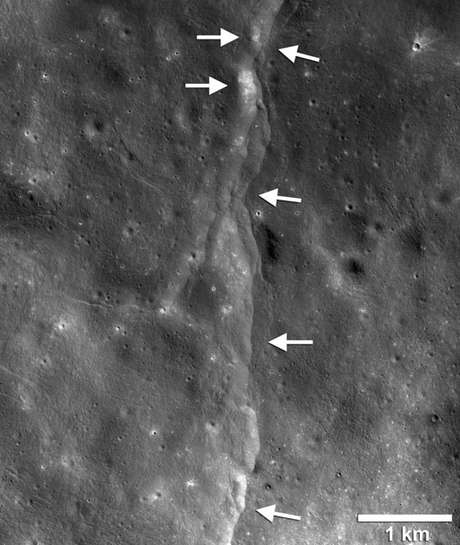
https://www.terra.com.br/noticias/ciencia/por-que-a-lua-esta-encolhendo-como-uma-uva-passa,e98e6426b39be31fd3eebfb088efedd6lmcgvien.htmlUma das falhas na superfície lunar; quando a Lua se encolhe, parte do córtex lunar se ergue e é empurrada sobre outra; as áreas mais brilhantes indicam zonas recentemente expostas por sismos
Uma das falhas na superfície lunar; quando a Lua se encolhe, parte do córtex lunar se ergue e é empurrada sobre outra; as áreas mais brilhantes indicam zonas recentemente expostas por sismos
Foto: NASA/GSFC/Arizona State University/Smithsonian / BBC News Brasil
AFP
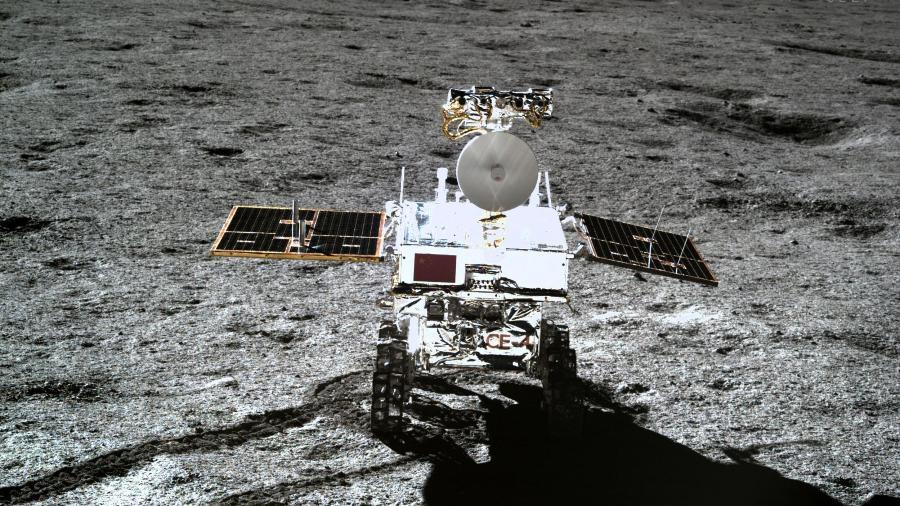
Sonda chinesa Chang'e-4 pousou no lado oculto da Lua em janeiro deste anoImagem: AFP
https://noticias.uol.com.br/ciencia/ultimas-noticias/redacao/2019/05/16/missao-espacial-chinesa-desvenda-segredos-do-lado-oculto-da-lua.htm
https://noticias.uol.com.br/ciencia/ultimas-noticias/redacao/2019/05/17/parto-cabelo-afinal-qual-e-a-influencia-da-lua-sobre-as-nossas-vidas.htm

sexta-feira, 19 de abril de 2019

April 15, 2019

Moon’s South Pole in NASA’s Landing Sites

In this multi-temporal illumination map of the lunar south pole, Shackleton crater (19 km diameter) is in the center, the south
In this multi-temporal illumination map of the lunar south pole, Shackleton crater (19 km diameter) is in the center, the south pole is located approximately at 9 o'clock on its rim. The map was created from images from the camera aboard the Lunar Reconnaissance Orbiter.
Credits: NASA/GSFC/Arizona State University
NASA is working right now to send American astronauts to the surface of the Moon in five years, and the agency has its sights set on a place no humans have ever gone before: the lunar South Pole.
Water is a critical resource for long-term exploration, and that’s one of the main reasons NASA will send astronauts to the Moon’s South Pole by 2024. Water is a necessity for furthering human exploration because it could potentially be used for drinking, cooling equipment, breathing and making rocket fuel for missions farther into the solar system. The experience NASA gains on the Moon, including using lunar natural resources, will be used to help prepare the agency to send astronauts to Mars.
“We know the South Pole region contains ice and may be rich in other resources based on our observations from orbit, but, otherwise, it’s a completely unexplored world,” said Steven Clarke, deputy associate administrator of the Science Mission Directorate at NASA Headquarters in Washington. “The South Pole is far from the Apollo landing sites clustered around the equator, so it will offer us a new challenge and a new environment to explore as we build our capabilities to travel farther into space.”
The South Pole is also a good target for a future human landing because robotically, it’s the most thoroughly investigated region on the Moon.
The elliptical, polar orbit of NASA’s Lunar Reconnaissance Orbiter (LRO) is closest to the Moon during its pass over the South Pole region. Through its thousands of orbits in the last decade, LRO has collected the most precise information about the South Pole region than any other, offering scientists precise details about its topography, temperature and locations of likely frozen water.
“We’ve mapped every square meter, even areas of permanent shadow,” said Noah Petro, an LRO project scientist based at NASA’s Goddard Space Flight Center in Greenbelt, Maryland.
There’s still so much to learn about Earth’s nearest neighbor. Ahead of a human return, NASA is planning to send new science instruments and technology demonstration payloads to the Moon using commercial landers through Commercial Lunar Payload Services (CLPS). These robotic precursors will further investigate regions of interest to human explorers, including the South Pole, and will provide information to the engineers designing modern lunar surface systems.
Water on the Moon
The floors of polar craters reach frigid temperatures because they’re permanently in shadow as a result of the low angle at which sunlight strikes the Moon’s surface in the polar regions (and also because the Moon has no atmosphere to help warm up its surface). This angle is based on the 1.54-degree tilt of the Moon’s axis (Earth’s is 23.5 degrees). If an astronaut was standing near the South Pole, the Sun would always appear on the horizon, illuminating the surface sideways, and, thus, skimming primarily the rims of deep craters, and leaving their deep interiors in shadow.
These permanently shadowed craters feature some of the lowest temperatures in the solar system — down to -414 degrees Fahrenheit (-248 Celsius). Water ice is stable at these temperatures and it is believed that some of these craters harbor significant ice deposits.
The South Pole’s frozen water may date back billions of years and has been untainted by the Sun’s radiation or the geological processes that otherwise constantly churn and renew planetary surfaces (think of wind and erosion on Earth), offering us a window into the early solar system.
“That record of water collection is a record that can help us understand how water and other volatiles have been moving around the solar system, so we’re very interested in getting to these locations and sampling the material there,” said John W. Keller, a lunar scientist at NASA’s Goddard Space Flight Center in Greenbelt, Maryland. Studying samples of ice from polar regions of Earth, for example, has revealed how our planet's climate and atmosphere have evolved over thousands of years.
Constant Light and Power
Other extremes at the Moon’s South Pole are not so dark and cold ­— there are also areas, near Shackleton crater for instance, that are bathed in sunlight for extended periods of time, over 200 Earth days of constant illumination. This happens also because of the Moon’s tilt and is a phenomenon that we experience at our own polar regions on Earth. Unrelenting sunlight is a boon to Moon missions, allowing explorers to harvest sunlight in order to light up a lunar base and power its equipment.
The president’s direction from Space Policy Directive-1 galvanizes NASA’s return to the Moon and builds on progress on the Space Launch System rocket and Orion spacecraft, collaborations with U.S industry and international partners, and knowledge gained from current robotic assets at the Moon and Mars.
Last Updated: April 19, 2019
Editor: Brian Dunbar
Tags:  Goddard Space Flight Center, Moon to Mars

Tradução


Polo Sul da Lua nos Locais de Aterrissagem da NASA

Neste mapa de iluminação multitemporal do pólo sul lunar, a cratera de Shackleton (19 km de diâmetro) está no centro, o sul
Neste mapa de iluminação multitemporal do pólo sul lunar, a cratera Shackleton (19 km de diâmetro) está no centro, o pólo sul está localizado aproximadamente às 9 horas em sua borda. O mapa foi criado a partir de imagens da câmera a bordo do Lunar Reconnaissance Orbiter.
Créditos: NASA / GSFC / Arizona State University
A Nasa está trabalhando agora mesmo para enviar astronautas americanos à superfície da Lua em cinco anos, e a agência está de olho em um lugar que nenhum homem jamais havia ido antes: o Pólo Sul lunar.
A água é um recurso crítico para a exploração a longo prazo, e essa é uma das principais razões pelas quais a NASA enviará astronautas para o Pólo Sul da Lua até 2024 . A água é uma necessidade para promover a exploração humana, pois ela poderia ser usada para beber, resfriar equipamentos, respirar e produzir combustível de foguete para missões mais distantes do sistema solar. A experiência adquirida pela NASA na Lua, incluindo o uso de recursos naturais lunares, será usada para ajudar a preparar a agência para enviar astronautas a Marte.
"Sabemos que a região do Pólo Sul contém gelo e pode ser rica em outros recursos com base em nossas observações orbitais, mas, de outro modo, é um mundo completamente inexplorado", disse Steven Clarke, vice-administrador associado da Diretoria de Missão Científica na sede da NASA. Washington. "O Pólo Sul está longe dos locais de pouso da Apollo, agrupados em torno do equador, por isso nos oferecerá um novo desafio e um novo ambiente para explorar, enquanto construímos nossa capacidade de viajar para o espaço."
O Pólo Sul também é um bom alvo para um futuro pouso humano, porque, roboticamente, é a região mais minuciosamente investigada na Lua.
A órbita elíptica e polar do Lunar Reconnaissance Orbiter ( LRO ) da NASA está mais próxima da Lua durante a sua passagem pela região do Pólo Sul. Através de suas milhares de órbitas na última década, a LRO coletou as informações mais precisas sobre a região do Pólo Sul do que qualquer outra, oferecendo aos cientistas detalhes precisos sobre sua topografia, temperatura e localização da provável água congelada.
"Nós mapeamos cada metro quadrado, até mesmo áreas de sombra permanente", disse Noah Petro, um cientista do projeto LRO baseado no Goddard Space Flight Center da NASA em Greenbelt, Maryland.
Ainda há muito a aprender sobre o vizinho mais próximo da Terra. Antes de um retorno humano, a NASA está planejando enviar novos instrumentos científicos e cargas úteis de demonstração de tecnologia para a Lua usando landers comerciais através do Commercial Lunar Payload Services ( CLPS ). Esses precursores robóticos investigarão ainda mais as regiões de interesse dos exploradores humanos, incluindo o Pólo Sul, e fornecerão informações aos engenheiros que projetam modernos sistemas de superfície lunar.
Água na lua
The floors of polar craters reach frigid temperatures because they’re permanently in shadow as a result of the low angle at which sunlight strikes the Moon’s surface in the polar regions (and also because the Moon has no atmosphere to help warm up its surface). This angle is based on the 1.54-degree tilt of the Moon’s axis (Earth’s is 23.5 degrees). If an astronaut was standing near the South Pole, the Sun would always appear on the horizon, illuminating the surface sideways, and, thus, skimming primarily the rims of deep craters, and leaving their deep interiors in shadow.
These permanently shadowed craters feature some of the lowest temperatures in the solar system — down to -414 degrees Fahrenheit (-248 Celsius). Water ice is stable at these temperatures and it is believed that some of these craters harbor significant ice deposits.
The South Pole’s frozen water may date back billions of years and has been untainted by the Sun’s radiation or the geological processes that otherwise constantly churn and renew planetary surfaces (think of wind and erosion on Earth), offering us a window into the early solar system.
“That record of water collection is a record that can help us understand how water and other volatiles have been moving around the solar system, so we’re very interested in getting to these locations and sampling the material there,” said John W. Keller, a lunar scientist at NASA’s Goddard Space Flight Center in Greenbelt, Maryland. Studying samples of ice from polar regions of Earth, for example, has revealed how our planet's climate and atmosphere have evolved over thousands of years.
Constant Light and Power
Other extremes at the Moon’s South Pole are not so dark and cold ­— there are also areas, near Shackleton crater for instance, that are bathed in sunlight for extended periods of time, over 200 Earth days of constant illumination. This happens also because of the Moon’s tilt and is a phenomenon that we experience at our own polar regions on Earth. Unrelenting sunlight is a boon to Moon missions, allowing explorers to harvest sunlight in order to light up a lunar base and power its equipment.
A direção do presidente da  Diretiva de Políticas Espaciais-1  galvaniza o retorno da NASA à Lua e amplia os progressos no foguete do Sistema de Lançamento Espacial e na nave espacial Orion, colaborações com a indústria dos EUA e parceiros internacionais e conhecimento obtido dos ativos robóticos atuais na Lua e em Marte .
Última atualização: 19 de abril de 2019
Editor: Brian Dunbar
Getty Images
Nações podem explorar a Lua, mas nenhuma delas pode reivindicar sua posse

https://noticias.uol.com.br/ciencia/ultimas-noticias/bbc/2018/08/30/o-minusculo-pais-que-lidera-a-corrida-do-ouro-espacial.htm

Nasa quer voltar à Lua - e fazer dela um hub para viagens espaciais

https://www.terra.com.br/noticias/ciencia/nasa-quer-voltar-a-lua-e-fazer-dela-um-hub-para-viagens-espaciais,ba67cff64f3d0bae61ce2e7d33caa6a7f5tzyoex.htmlPara chegar até a Lua, a Nasa projeta uma cápsula semelhante à Apollo, mas três vezes maior - com capacidade para quatro astronautas

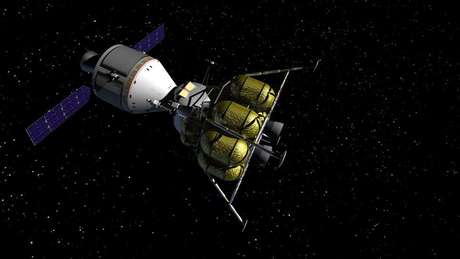
Para chegar até a Lua, a Nasa projeta uma cápsula semelhante à Apollo, mas três vezes maior - com capacidade para quatro astronautas
Foto: NASA / BBC News Brasil
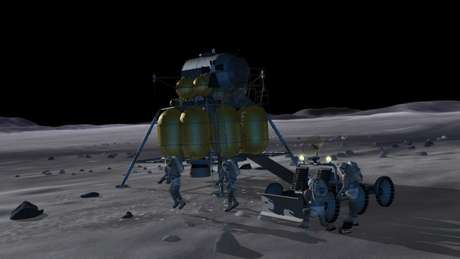
Estimativa é que os primeiros astronautas possam chegar à Lua em 2024
Foto: NASA / BBC News Brasil

sexta-feira, 12 de abril de 2019

NASA and Boeing Extend Starliner Crew Flight Test Duration to Space Station, Target New Flight Dates


Boeing's Starliner prepares for acoustic testing at Boeing's spacecraft test facilities in El Segundo, California.
Boeing's Starliner prepares for acoustic testing at Boeing's spacecraft test facilities in El Segundo, California. This vehicle, known as Spacecraft 2, will fly Starliner's Crew Flight Test after it returns to Florida from environmental testing.
Credits: Boeing
NASA and Boeing have agreed to extend the duration of the company’s first crewed flight test to the International Space Station after completing an in-depth technical assessment of the CST-100 Starliner systems. NASA found the long-duration flight to be technically feasible and in the best interest of the agency’s needs to ensure continued access and better utilization of the orbiting laboratory.
The extended duration test flight offers NASA the opportunity to complete additional microgravity research, maintenance, and other activities while the company’s Starliner is docked to station. The mission duration will be determined at a later date.
“NASA’s assessment of extending the mission was found to be technically achievable without compromising the safety of the crew,” said Phil McAlister, director of the commercial spaceflight division at NASA Headquarters. “Commercial crew flight tests, along with the additional Soyuz opportunities, help us transition with greater flexibility to our next-generation commercial systems under the Commercial Crew Program.”   
The agency and its industry partner also agreed to adjust the target launch dates for flight tests, which will demonstrate Boeing’s readiness ahead of NASA certification to fly crew regularly to the station.
Boeing is now targeting August for its uncrewed Orbital Flight Test, although this date is a working date and to be confirmed. The decision to adjust that launch date was guided by limited launch opportunities in April and May, as well as a critical U.S. Air Force national security launch – AEHF-5 – atop a United Launch Alliance Atlas V rocket from Space Launch Complex-41 in June. The company’s first flight with astronauts on board, called the Crew Flight Test, is now targeted for late 2019, again to be confirmed closer to that timeframe. Boeing also will fly a Pad Abort Test before those two orbital flights to demonstrate the company’s ability to safely carry astronauts away from a launch vehicle emergency, if necessary.
“The uncrewed flight tests provide a wealth of data for us to analyze every phase of flight,” said Steve Stich, NASA’s Commercial Crew Program deputy manager. “They offer a phenomenal opportunity for us to evaluate the end-to-end performance of the systems, and really set us up for flight tests with crew. Our Boeing and NASA teams are making tremendous progress without compromising safety as we prepare for launch.”
While the Starliner spacecraft for the Orbital Flight Test is close to complete, the additional time will allow teams to thoroughly focus on the test and validation activities well ahead of launch.
"We remain diligent, with a safety-first culture,” said John Mulholland, vice president and program manager, Boeing’s Commercial Crew Program. “While we have already made substantial progress this year, this shift gives us the time to continue building a safe, quality spacecraft capable of carrying crews over and over again after a successful uncrewed test, without adding unnecessary schedule pressure.”
Boeing continues to advance toward meeting the agency’s goal of returning human spaceflight launches from American soil to the International Space Station as a part of NASA’s Commercial Crew Program.
Orbital Flight Test Progress
A look at the Starliner that will soon fly the uncrewed Orbital Flight Test.
A look at the Starliner that will soon fly the uncrewed Orbital Flight Test soon after the dome mate activities at the Boeing Commercial Crew and Cargo Processing Facility at the Kennedy Space Center.
Credits: Boeing
Boeing’s Starliner spacecraft for the uncrewed flight test is nearly complete. This spacecraft is designed to be reusable up to 10 times, and will be used for the company’s first full operational mission after certification. The Starliner team is working to complete all of the critical testing and integration on the spacecraft to ensure the shortest possible time between the completion of the uncrewed flight and the first launch of crew, and then to operational missions to station.
Boeing technicians meticulously lower the Starliner upper dome to the lower dome before bolting and sealing the pressure vessel.
Credits: Boeing
On March 11, Boeing mated the upper and lower domes of the same spacecraft inside its Commercial Crew and Cargo Processing Facility at Kennedy Space Center in Florida. The two domes underwent outfitting with avionics, cooling systems, wire harnesses, fuel and life support lines, and other critical systems before being mated together. This is one of the last major milestones ahead of final processing and closeouts for flight.
NASA and Boeing teams also completed two parachute tests. In February, a “lawn dart” dropped out of a C-17 aircraft over the Yuma Proving Ground in Arizona, and the parachutes performed as planned. These reliability tests are part of a special studies program NASA initiated to validate the robust design of Starliner’s parachute systems. Then in March at the White Sands Missile Range in New Mexico, Boeing completed the fourth of five parachute qualification tests. Successful completion of all five tests will qualify the entire Starliner landing system for flight with crew.
Another key milestone for the capsule included successful range of motion testing on the docking adapter – known as the NASA Docking System, or NDS – that will connect Starliner to the space station’s Harmony module later this year.
Pad Abort Test Progress
Boeing also is working on the Starliner spacecraft slated to fly the Pad Abort Test, which will demonstrate the abort engines can push the spacecraft about a mile up and a mile out from the test site. This test will take place at White Sands Missile Range in New Mexico ahead of the Orbital Flight Test.
As a precursor to the abort, the company is preparing to restart its Service Module Hot Fire test campaign at NASA’s White Sands Test Facility in New Mexico this spring. New hardware, including launch abort engine valves, have been redesigned and manufactured and are being installed on the test abort engines. The next set of new hardware will soon be installed in the pad abort service module.
Crew Flight Test Progress
Technicians at Boeing Space Environment Test Facility in El Segundo, California, position Starliner for an acoustics test.
Technicians at the Boeing Space Environment Test Facility in El Segundo, California, position Starliner inside the acoustics test chamber.
Credits: Boeing
Boeing’s Crew Flight Test spacecraft recently completed its Environmental Qualification Test campaign at the company’s Space Environment Test Facilities in El Segundo, California. The Crew Flight Test vehicle underwent rounds of acoustics vibration, thermal vacuum and electromagnetic interference and electromagnetic contamination testing. These tests are designed to simulate the harsh environments of launch, ascent and orbit and also prove that the electronics systems will operate in space and not interfere with other satellites or the station.
NASA astronauts Nicole Mann and Mike Fincke and Boeing’s Chris Ferguson are continuing preparations for the Crew Flight Test at Johnson Space Center in Houston. They are training on Starliner’s systems, including nominal and unlikely scenarios, such as water rescue training. They are also well into space station training, and are now focusing on becoming a longer duration crew. Mann and Fincke are training for upcoming spacewalks, and Ferguson is training to support them from inside the station. 
Chris Ferguson, with Boeing, helps Nicole Mann, left, and Mike Fincke, right, both with NASA, train for a spacewalk.
Credits: Boeing
Post-Certification Mission Progress
The crew for NASA’s first operational mission on Starliner, Suni Williams and Josh Cassada, are continuing similar training. All five Starliner crew members are making regular trips to Starliner production and test facilities to get to know the people and the vehicles that will take them safely to orbit and back.
SpaceX Demo-2 Update
NASA also is working with SpaceX to return human spaceflight launches to American soil. The company completed an uncrewed flight test, known as Demo-1, to the space station in March. SpaceX now is processing the same Crew Dragon spacececraft for an in-flight abort test. The company then will fly a test flight with a crew, known as Demo-2, to the station.
NASA's Commercial Crew Program and SpaceX are expected to reevaluate its target test dates in the next couple weeks.
Last Updated: April 3, 2019
Editor: Linda Herridge
Tags:  Commercial Crew, Commercial Space, Humans in Space, Kennedy Space Center
Tradução

NASA e Boeing estendem a duração do teste de voo da tripulação Starliner para a estação espacial, novas datas de vôos

Starliner da Boeing se prepara para testes acústicos nas instalações de testes de aeronaves da Boeing em El Segundo, Califórnia.
Starliner da Boeing se prepara para testes acústicos nas instalações de testes de aeronaves da Boeing em El Segundo, Califórnia. Este veículo, conhecido como Nave Espacial 2, voará no Teste de Voo da Tripulação da Starliner depois de retornar à Flórida a partir de testes ambientais.
Créditos: Boeing
A NASA e a Boeing concordaram em estender a duração do primeiro teste de voo tripulado da empresa para a Estação Espacial Internacional, depois de concluir uma avaliação técnica aprofundada dos sistemas CST-100 Starliner. A NASA descobriu que o voo de longa duração é tecnicamente viável e no melhor interesse das necessidades da agência, para garantir acesso contínuo e melhor utilização do laboratório em órbita.
O voo de teste de duração estendida oferece à NASA a oportunidade de realizar pesquisa adicional de microgravidade, manutenção e outras atividades enquanto o Starliner da empresa é acoplado à estação. A duração da missão será determinada em uma data posterior.
"A avaliação da NASA de extensão da missão foi tecnicamente viável sem comprometer a segurança da tripulação", disse Phil McAlister, diretor da divisão de voos espaciais comerciais na sede da NASA. “Os testes de voo da tripulação comercial, juntamente com as oportunidades adicionais da Soyuz, ajudam-nos a fazer a transição com maior flexibilidade para os nossos sistemas comerciais da próxima geração ao abrigo do Programa de Tripulações Comerciais.”   
A agência e seu parceiro também concordaram em ajustar as datas de lançamento dos testes de voo, o que demonstrará a disponibilidade da Boeing antes da certificação da NASA para transportar a tripulação regularmente para a estação.
A Boeing agora está mirando em agosto para o teste de vôo orbital sem tripulação, embora essa data seja uma data de trabalho e para ser confirmada. A decisão de ajustar a data de lançamento foi guiada por oportunidades limitadas de lançamento em abril e maio, bem como um lançamento de segurança nacional da Força Aérea dos EUA - AEHF-5 - no foguete United Launch Alliance Atlas V do Complexo de Lançamento Espacial-41 em junho . O primeiro voo da empresa com astronautas a bordo, chamado de Teste de Vôo da Tripulação, agora está previsto para o final de 2019, novamente a ser confirmado mais próximo desse período. A Boeing também realizará um teste Pad Abort antes desses dois vôos orbitais para demonstrar a capacidade da empresa de transportar com segurança os astronautas para longe da emergência de um veículo de lançamento, se necessário.
"Os testes de vôo sem tripulação fornecem uma riqueza de dados para analisarmos cada fase do voo", disse Steve Stich, vice-gerente do Programa de Tripulação Comercial da NASA. “Eles oferecem uma oportunidade fenomenal para avaliarmos o desempenho de ponta a ponta dos sistemas e realmente nos preparam para testes de voo com a tripulação. Nossas equipes da Boeing e da NASA estão fazendo um tremendo progresso sem comprometer a segurança enquanto nos preparamos para o lançamento ”.
Enquanto a espaçonave Starliner para o Teste de Vôo Orbital está perto de terminar, o tempo adicional permitirá que as equipes se concentrem completamente nas atividades de teste e validação bem antes do lançamento.
"Continuamos diligentes, com uma cultura de segurança inicial", disse John Mulholland, vice-presidente e gerente de programa do Programa de Tripulações Comerciais da Boeing. "Embora já tenhamos feito progressos substanciais este ano, essa mudança nos dá tempo para continuar construindo , espaçonaves de qualidade capazes de transportar tripulações repetidas vezes após um teste sem destroços bem sucedido, sem adicionar pressão desnecessária no cronograma. ”
A Boeing continua avançando em direção ao objetivo da agência de devolver os lançamentos de voos espaciais tripulados de solo americano para a Estação Espacial Internacional como parte do Programa de Tripulação Comercial da NASA.
Progresso do Teste de Voo Orbital
Uma olhada no Starliner que em breve fará o Teste de Vôo Orbital.
Um olhar sobre o Starliner que em breve realizará o Teste de Voo Orbital sem tripulação logo após as atividades de acasalamento no Boeing Commercial Crew e Cargo Processing Facility no Centro Espacial Kennedy.
Créditos: Boeing
A espaçonave Starliner da Boeing para o teste de vôo sem tripulação está quase completa. Essa espaçonave foi projetada para ser reutilizável até 10 vezes e será usada para a primeira missão operacional completa da empresa após a certificação. A equipe Starliner está trabalhando para completar todos os testes críticos e a integração na espaçonave para garantir o menor tempo possível entre a conclusão do voo sem tripulação e o primeiro lançamento da tripulação, e depois para as missões operacionais para a estação.
Os técnicos da Boeing abaixam meticulosamente a cúpula superior da Starliner até a cúpula inferior antes de parafusar e selar o vaso de pressão.
Créditos: Boeing
Em 11 de março, a Boeing acasalou as cúpulas superiores e inferiores da mesma espaçonave dentro de sua Unidade de Processamento de Carga e Tripulação Comercial no Centro Espacial Kennedy, na Flórida. As duas cúpulas foram equipadas com aviônicos, sistemas de resfriamento, cablagens, linhas de combustível e suporte de vida e outros sistemas críticos antes de serem acoplados em conjunto. Este é um dos últimos grandes marcos antes do processamento final e do encerramento do voo.
Equipes da NASA e da Boeing também completaram dois testes de pára-quedas. Em fevereiro, um “dardo de gramado” caiu de uma aeronave C-17 sobre o Campo de Provas Yuma, no Arizona, e os pára-quedas se comportaram como planejado. Esses testes de confiabilidade são parte de um programa de estudos especiais que a NASA iniciou para validar o projeto robusto dos sistemas de pára-quedas da Starliner. Então, em março, no White Sands Missile Range, no Novo México, a Boeing completou o quarto de cinco testes de qualificação de pára-quedas. A conclusão bem-sucedida de todos os cinco testes qualificará todo o sistema de pouso Starliner para voo com tripulação.
Outro marco importante para a cápsula incluiu testes bem-sucedidos de amplitude de movimento no adaptador de acoplamento - conhecido como NASA Docking System, ou NDS - que conectará o Starliner ao módulo Harmony da estação espacial no final deste ano.
Progresso do teste de anulação do bloco
A Boeing também está trabalhando na espaçonave Starliner programada para realizar o Pad Abort Test, que demonstrará que os motores de aborto podem empurrar a espaçonave a cerca de um quilômetro e meio de distância do local de teste. Este teste será realizado na White Sands Missile Range, no Novo México, antes do Teste de Vôo Orbital.
Como um precursor do aborto, a empresa está se preparando para reiniciar sua campanha de teste Hot Fire do Módulo de Serviço no White Sands Test Facility da NASA no Novo México nesta primavera. O novo hardware, incluindo as válvulas de mecanismo de abortamento de lançamento, foi redesenhado e fabricado e está sendo instalado nos motores de aborto de teste. O próximo conjunto de novo hardware será instalado em breve no módulo de serviço de cancelamento de pads.
Progresso do Teste de Vôo da Tripulação
Técnicos da Boeing Space Environment Test Facility em El Segundo, Califórnia, posicionam a Starliner para um teste de acústica.
Técnicos da Boeing Space Environment Test Facility, em El Segundo, Califórnia, posicionam a Starliner dentro da câmara de teste de acústica.
Créditos: Boeing
A espaçonave da Crew Flight Test da Boeing completou recentemente sua campanha de Teste de Qualificação Ambiental nas instalações de testes de ambiente espacial da empresa em El Segundo, Califórnia. O veículo de teste de voo da tripulação foi submetido a rondas de vibração acústica, vácuo térmico e interferência eletromagnética e teste de contaminação eletromagnética. Estes testes são projetados para simular os ambientes agressivos de lançamento, subida e órbita e também provar que os sistemas eletrônicos operarão no espaço e não interferirão com outros satélites ou com a estação.
Os astronautas da NASA Nicole Mann e Mike Fincke e Chris Ferguson da Boeing estão continuando os preparativos para o Teste de Vôo da Tripulação no Johnson Space Center, em Houston. Eles estão treinando nos sistemas da Starliner, incluindo cenários nominais e improváveis, como treinamento de resgate de água. Eles também estão bem no treinamento da estação espacial, e agora estão se concentrando em se tornar uma equipe de maior duração. Mann e Fincke estão treinando para as próximas caminhadas espaciais, e Ferguson está treinando para apoiá-los de dentro da estação. 
Chris Ferguson, da Boeing, ajuda Nicole Mann, à esquerda, e Mike Fincke, à direita, ambos na NASA, a treinar para uma caminhada no espaço.
Créditos: Boeing
Progresso da Missão Pós-Certificação
A tripulação da primeira missão operacional da NASA em Starliner, Suni Williams e Josh Cassada continua treinamentos similares. Todos os cinco membros da tripulação da Starliner estão fazendo viagens regulares às instalações de produção e teste da Starliner para conhecer as pessoas e os veículos que os levarão em segurança para a órbita e a volta.
Atualização Demo-2 da SpaceX
A NASA também está trabalhando com a SpaceX para devolver os lançamentos de voos espaciais tripulados ao solo americano. A empresa completou um teste de voo sem destroços, conhecido como Demo-1, para a estação espacial em março. A SpaceX agora está processando a mesma espaçonave Crew Dragon para um teste de aborto em vôo. A empresa então fará um voo de teste com uma tripulação, conhecida como Demo-2, para a estação.
Espera-se que o Programa de Tripulações Comerciais da NASA e a SpaceX reavaliem as datas dos testes-alvo nas próximas duas semanas.
Última atualização: 3 de abril de 2019
Editor: Linda Herridge

  NASA se prepara para juntar duas partes principais para o Artemis II Core Stage Os técnicos estão se preparando para conectar duas partes ...